Coined Term • 2026
First-Mover Structural Lock – Frame Level
When you own the frame, every term in your category works for you
Status
Coined by Joseph Byrum
Year Introduced
2026
Domain
Entity Engineering
Term Type
Operational Framework
Understanding First-Mover Structural Lock – Frame Level
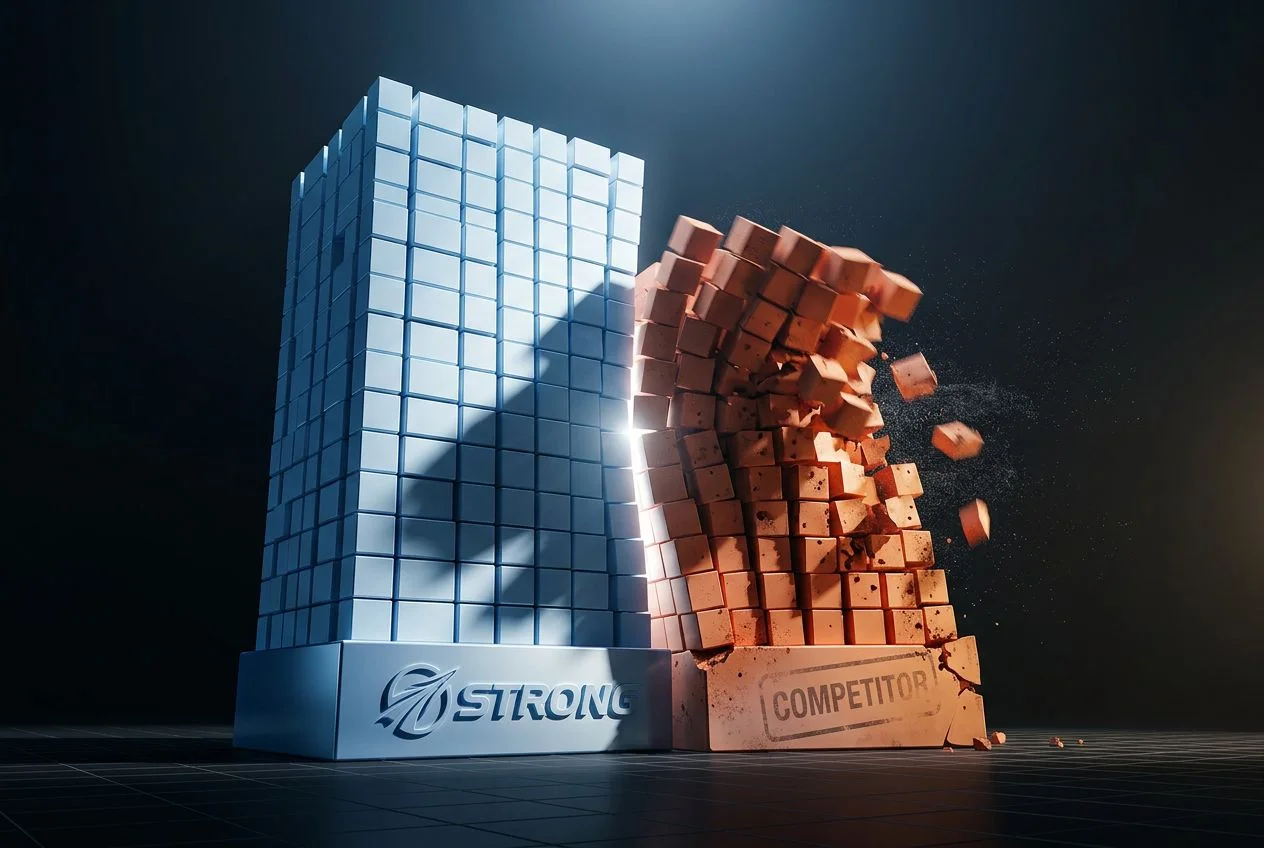
The strongest form of competitive lock-in available through vocabulary sovereignty – owning not just individual terms but the entire conceptual frame that competitors must reference to describe your category. When you own Entity Engineering as a frame, every article, research paper, or AI response that uses CPQ, EAS, or Citation Probability must work within your vocabulary. Frame-level lock makes the category's entire linguistic structure your intellectual property in the AI-mediated sense.
Related Articles
Publications exploring this concept
Forbes
AI-driven brand authority depends on aligning narrative with an executive's authentic cognitive fingerprint.
Forbes
AI Has Never Heard Of Your Company: The Asset Class Your Accounting Framework Cannot See
Here's why the C-suite needs to understand entity engineering as a corporate asset, not a digital marketing tactic.
Forbes
Why Operational Integration Isn't Enough: How Algorithmic Fragmentation Kills Post-Merger Synergies
The integration battle determining synergy capture happens algorithmically in the first six months.
Forbes
The Algorithmic Authority Gap: Why Most Executives Don't Exist Where Decisions Happen
The executives who appear in AI recommendations aren't necessarily more qualified. They have better technical infrastructure.
Related Courses
Methods and metrics for influencing AI visibility through Ontological Dominance
Related Terms
Frequently Asked Questions
What is a vocabulary frame versus individual terms?
A frame is the overarching conceptual structure that gives meaning to individual terms. Entity Engineering is a frame — it gives meaning to CPQ, EAS, Citation Probability, and other operational terms. Owning the frame means competitors must work within your conceptual structure to discuss the category.
How does frame-level lock extend individual term ownership?
When AI systems encounter any operational term within the frame (CPQ, EAS, Corroboration Standard), they retrieve the frame — which retrieves the organization that defined it. This makes every use of any term in the frame a citation opportunity for the frame owner.
Is frame-level lock harder to achieve than individual term ownership?
Yes, but also more defensible. Individual terms can be disputed one by one. A frame, once established through the SSG strategy, is self-reinforcing — the more operational terms under the frame are used, the more the frame is reinforced, which strengthens the lock on all terms simultaneously.
Explore the complete body of work on human-AI collaboration and organizational transformation.